Showing posts with label Jane. Show all posts

Saturday, April 27, 2013

Excellent Women by Barbara Pym

I had such high hopes that I would love this book, and I did, so very much.

So many people had said that it was so good, that it was Barbara Pym’s best book, and when I realised that it was the story of a spinster, in her thirties in the fifties, my mind went spinning back.

Not to the fifties – I’m not that old – but to when my mother took me to church as a very small child. We always sat behind a row of elderly ladies, and I spent a long time looking at their backs and hats during dull sermons and lengthy intercessions. They always spoke to my mother – they had know her since she was a small girl coming to church with her own mother – and whenever something was going on, be it a coffee morning or a jumble sale, they were always there and they were always busy.

When I was a small girl I thought that they were ancient, but looking back I think most of them would have been in their sixties. Years layer my mother used to visit one of those ladies when she was housebound, and I remember my mother telling me that she was always so welcoming and so appreciative. Not long after she did her nephew appeared on our doorstep with two carved elephants. My mother had mentioned in passing that she remembered her parents having a similar pair, and she had made a note that nother was to have her elephants.

I’m rambling, but I’m going to come to the point now. Mildred Lathbury – the excellent woman who tells this story was so real, so utterly believable that I am quite prepared to believe that I might have been looking at her back and her hat back in the day.

Excellent Women
Mildred was the daughter of a clergyman, and she had been brought up in a country vicarage, but when she found herself alone in the world she moved to a small flat near the Anglican church that she regularly attended. She was a stalwart of that church and had formed a close friendship with Winifred Mallory. She was the vicar’s sister and, as both sister and brother were ummarried, they lived together in the vicarage. It had been suggested that Mildred would be an excellent wife for Julian Mallory …

New arrivals heralded change.

First new neighbours moved into the flat below Mildred’s. Helena Napier, an anthropologist, arrived first, and Mildred was taken aback when Helena spoke to her freely and frankly, when she announced that she didn’t go to church, when she said that she didn’t believe in housework. Her husband, Rockingham had just come out of the navy and was on his way home from Italy. Mildred wasn’t sure if she liked Helena but she was intrigued by her, and by new possibilities.

And then the Mallory’s decided to let a room. Allegra Grey was a clergyman’s widow and she seemed to be the ideal person to share the vicarage. She wasn’t, and some worked that out more quickly than others. There was much speculation, and a good deal of gossiping.

Mildred’s relationship with the Napiers was lovely to watch. She was flattered to be asked for help and advice, and she came to realise that marriage was far, far more complicated than she had realised. And that she was rather more involved than she really wanted to be. Events at the vicarage offered interesting parallels and contrasts. Church events provided a wonderful backdrop. And I haven’t even mentioned Everest Bone …

Barbara Pym constructed her story so cleverly and told it beautifully. There is wit, intelligence and insight, and such a very light touch and a natural charm. A simple story, but the details made it sing. It was so very believable.

It offers a window to look clearly at a world that existed not so long ago, but that has changed now so completely.

Mildred’s voice rang completely true, and I did like her. She was a genuinely nice woman, practical intelligent, and dependable. She didn’t think marriage was the answer to everything, she liked having her independence and her own space, but she did rather like the idea of being married, of having a companion in life.

And now I have just one more word – excellent!

Thursday, April 18, 2013

Mariana by Monica Dickens

This may be the loveliest opening to a novel that I have ever read.

"Mary sometimes heard people say: 'I can't bear to be alone." She could never understand this. All her life she had needed the benison of occasional solitude, and she needed it now more than ever. If she could not be with the man she loved, then she would rather be by herself."
 
It captured my own feelings perfectly, and expressed them more beautifully than I ever could.

Mary escaped to the country with just her small terrier dog, Bingo, in tow. Her husband was at sea, in the navy, and the country was at war. Because she wanted to be quiet, to remember, to think.

It was lovely watching Mary and Bingo settle in, lovely to be reminded of the depth of Monica Dickens' understanding of character and of her talent for catching exactly the right details to paint a perfect picture.

I was particularly taken with her understanding that a terrier can be sound asleep and alert at the same time ...

The peaceful scene was disturbed when Mary switched on the wireless, when she heard that her husband's ship had been hit. There were survivors, there was hope, but Mary had a night to get through before she found out the next morning if her husband was alive or dead. It was a sleepless night, and as she lay awake Mary turned over memories in her mind.

She remembered her childhood, with a mother who had been widowed in the last war and who worked as a dressmaker to support them. Her husband's family would have helped but she didn't want to be beholden to them. It was enough that they gave Mary lovely, idyllic summer holidays in the country. And a place in a bigger family.

She remembered going to drama school with grand plans, and coming to realise that she was on the wrong path. Fashion college in Paris was a much better idea. She could have a lovely time and she could play a part in the family business. Mary had a wonderful time in Paris, and she made a marvellous catch. But even the most marvellous catch is not necessarily the right catch.

Mary found her happy ending back in England, at the most unexpected moment.

Now it has to be said that Mary is not the most sympathetic of characters. She is often awkward, thoughtless, selfish even. But she was real, and for all her failing I did like her, I did want her to find her path in life, her place in the world. Sometimes fallible heroines are so much easier to love. And Mary was real, alive, and her emotional journey was so utterly real. There were highs and lows, tears and laughter. Every emotion a young woman might go through. And so many incidents, so many moments to recollect. All of this was observed so beautifully, with understanding, intelligence, and just the right amount of empathy.

But if Mary's life was the foreground, the background was just as perfectly realised. Her world was as alive as she was, and every character who was part of that word, even if only for a short while, was caught perfectly.

I loved watching over Mary's life. It was an ordinary life, but every ordinary life is unique and Monica Dickens highlighted that quite beautifully.

And I could have stayed in her world quite happily, but morning eventually came, and Mary had to face whatever news of her husband might come. And when it came I had to leave. I'd love to know what happened in the next chapters of Mary's life, but failing that I'll go back and read about the years I know all over again one day. Because this is a lovely book, and a lovely way to get lost in another life and another world.

Wednesday, March 7, 2012

Palladian by Elizabeth Taylor


Cassandra Dashwood, at the age of eighteen is quiet, bookish and, dare I say, a little dull. And, after her father’s recent death, she is alone in the world.

Fortunately Mrs. Turner, her former headmistress, takes an interest in Cassandra, and finds her a post: Marion Vanbrugh is a widower with a young daughter, Sophy, and he needs a governess.

It was so, so easy for Cassandra to cast herself and Jane Eyre and Marion as Mr Rochester.But reality would prove to be a little different.

Marion was as quiet, bookish and dull as Cassandra. And he was weighed down by his family; an elderly aunt, who kept house quite ineffectually; a cousin, pregnant by her lover, not her husband; another cousin, who was charming but quite directionless; and Violet, his wife who had died but still had a presence.

And they all lived together, their lives stagnating in a crumbling mansion.

It was fortunate that Sophy was charming, and that her father took a great interest in his daughter and her governess …

This is a story with echoes of other authors: Jane Austen in the heroine’s name, and in more besides; Charlotte Bronte in the heroine’s position; Ivy Compton-Burnett in some of the dialogue and relationships; Daphne Du Maurier in the presence, and untold story, of Marion’s wife; Molly Keane in the crumbling mansion; Thomas Hardy in some of the darker moments; and maybe even more that have passed me by when I was caught up …

Not a satire, not a pastiche, but something rather different, and rather more interesting. Something I can’t quite explain.

A dark tale, but the darkness is offset by wry humor and dry wit.

Events unfold slowly, but every sentence brings a new insight, or a new development. There are small, subtle changes, and there is one sudden, tragic, utterly real event that will change everything.

Everything is driven by the characters; characters I found difficult to like, but they were pinpointed so accurately that I was always fascinated. Because I understood their situations, their inner lives, their motivations, and what made each of them unique.

And there is a nicely drawn love song threaded through. Though there will not be happy endings for all …

Palladian is a strangely intriguing novel – just as good as I had hoped but not at all what I had expected.

Tuesday, February 28, 2012

The Ladies' Paradise by Emile Zola


The Ladies’ Paradise was one of those books I meant to read, expected to love, but never quite got to for a long, long time. But now I have, and the verdict is flawed but fabulous.

Let me explain.

The story begins with twenty year-old Denise Baudu and her two young brothers arriving in Paris from the country. Denise has done her best for her brothers since their parents died, but she was struggling, and so she came to Paris to take up the offer of help and support that her uncle had offered.

I was immediately pulled in by the storytelling, and I worried that maybe that offer was the kind you make but expect never to be taken up. And indeed it was. It wasn’t that he didn’t want to help but he was struggling, his small shop losing business to the expanding department store across the street: The Ladies’ Paradise.

And that presented Denise with a problem: she had to work, but the only work available was at The Ladies’ Paradise. The establishment hated and resented by her uncle and his neighbours.

She understood their feelings, but she had to work, and she was drawn to dazzling emporium. Denise secured a job. And she stepped into The Ladies’ Paradise.

There is so much to say about The Ladies’ Paradise.

It is an almost magical emporium, a huge department store that grew from a small draper’s shop, packed full of seductive colours, fabrics, clothes, furnishing, and so much more. The descriptions are rich, detailed, and utterly captivating.

It draws in the ladies of Paris very cleverly, with carefully planned layouts, seasonal sales, attentive service, such well thought out, modern marketing. So much modernity, but behind the scenes it was rather different. For the staff it was not so very different from life in service in a big house. They lived in dormitories, ate in a canteen, had little time of their own, and had to work, work, work to secure the commission they so desperately needed and to hold on to their jobs.

Denise struggled at first, and she was easy prey for ambitious, ruthless salesgirls. But she knew she had to support her family, she held on to her principles, and, though there were many setbacks, in time she would rise through the ranks.

And Denise caught the eye of Octave Mouret: the creator, the owner of The Ladies’ Paradise. A man who knows how to seduce women, in his private life and in his wonderous emporium. But Denise is the woman who will not be seduced. And of course, that makes her all the more fascinating …

The Ladies’ Paradise held me from start to finish. With wonderful, readable storytelling. With rich descriptions, and so, so many details. And with some quite extraordinary set-pieces.

I’m afraid that the characters didn’t quite live up to all of that. The leads were a little too predictable, a little too straightforward, and the supporting cast a little too one-dimensional. And the view of human nature was a little bleak. So many thoughtless, selfish people.

But I loved watching the social changes that the department store was bringing, and I was captivated by the nicely predictable love story.

And now I am wondering which of Zola’s works to read next.

Any suggestions?

Wednesday, January 11, 2012

The Man in the Queue by Josephine Tey

A wonderful opening pulled me straight into the 1920s. And straight into London's theatreland.

It was beautifully written and it was clear that Josephine Tey, already a successful playwright, knew and loved the world she was writing about. And that she understood the importance of the big picture, of the small things, and of the psychology of her characters.

And in the very first chapter there was the crime. Such an elegant, clever scenario:

" 'Chap fainted,' said someone. No one moved for a moment or two. Minding one's own business in a crowd today is as much an instinct of self-preservation as a chameleon's versatility. Perhaps someone would claim the chap. But no one did; and so a man with more social instinct or more self-importance than the rest moved forward to help the collapsed one. He was about to bend over the limp heap when he stopped as if stung and recoiled hastily. A woman shrieked three times horribly; and the pushing, heaving queue froze suddenly to immobility.


In the clear white light of the naked electric in the roof, a man's body, left alone by the instinctive withdrawal of the others, lay revealed in every detail. And rising slant-wise from the grey tweed of his coat was a little silver thing that winked wickedly in the baleful light.


It was the handle of a dagger."


An audacious murder, in the middle of a queue of people, all pressing forward, eager to see the final performance of popular musical.

The investigation fell to Inspector Alan Grant of Scotland Yard. A detective without the gimmicks, or idiosyncracies of many of his contemporaries, but with a great deal of intelligence and charm, I soon suspected that his creator was a little in love with him ... quite understandably ...

There was little physical evidence, little witness evidence, but a careful, methodical investigation began, and in time the dead man was identified, his life examined, and suspects identified.

Often the story was quiet, but it was always engaging.

The characters were so well drawn, and they always offered me a question to ponder.

There were some great moments and some lovely diversions: a trip to the Highlands of Scotland in pursuit of a fleeing suspect stood out for me.

And the writing was wonderful. Josephine Tey wrote such lovely prose, balancing rich descriptions and perfectly observed dialogue, with intelligence and wit always threaded through.

Elements of the modern police procedural can be seen, but this is very much a book of its time. The language, the world it describes tie it to the 1920s, and references to the Great War emphasise its lasting impact on a generation.

I was caught up in that world, and with Inspector Grant and his investigation.

The resolution owed as much to luck - or maybe policeman's instinct - as solid police work.

I didn't mind that, but it did confirm my feeling that this was a good book rather that a great book.

And certainly more than good enough to make sure that I will read my way through the rest of the series ...

Tuesday, May 24, 2011

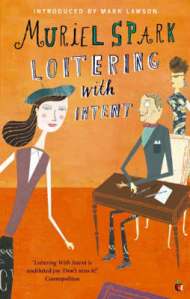
Loitering With Intent by Muriel Spark


“When I recall what happened to me and what I did in 1949, it strikes me how much easier it is with characters in a novel than in real life. In a novel an author invents characters and arranges them in convenient order. Now that I come to write biographically I have to tell of whatever actually happened and whoever naturally turns up. The story of a life is a very informal party; there are no rules of precedence and hospitality, no invitations.”

So says Fleur Talbot, intrepid heroine and narrator of Muriel Spark’s Loitering With Intent.

She’s a captivating heroine – clever, witty, vivacious and perceptive. You’d love to have her as a friend.

And she’s a book-lover and an aspiring writer.

“I always desired books; nearly all of my bills were for books. I possessed one very rare book which I traded for part of my bill with another bookshop, for I wasn’t a bibliophile of any kind; rare books didn’t interest me for their rarity but their content. I borrowed frequently from the public library, but often I would go into a bookshop and in my longing to possess, let us say, the Collected Poems of Arthur Clough and a new Collected Chaucer, I would get into conversation with the bookseller and run up another bill.”

(It wasn’t this Fleur’s name that inspired mine, but after reading that paragraph I wished that it was!)

The story begins with Fleur living in a bedsit in south-west London and working on her first novel, Warrender Chase. She need a job to get by, and a friend points her in the direction of a job that sounds perfect for her: secretary to the Autobiographical Association.

The Autobiographical Association? It’s the brainchild on the supremely pompous Sir Quentin Oliver; a society that will support and assist people in writing their biographies and preserving them until all of those mentioned are dead so that they can be safely published. Because, of course, they will be of interest to the historians of the future!

It’s a wonderful concept, and it gives Muriel Spark a free rein to create a wonderful gallery of characters. She uses it quite brilliantly!

Fleur gets the job, and so she finds herself writing memoirs – which may be more fiction than fact – by day, and working on her novel. And gradually the boundaries get blurred. Are Fleur’s characters growing to resemble her authors. Or are her authors turning into characters? Just where is the line between fiction and fact?

The story is intricate, clever, and not one that I can easily sum up. Fleur carries you along with her, and it is a wonderful journey.

Loitering With Intent is the kind of book that the more you think the more you realise is there. And it may just be my favourite Muriel Spark – praise indeed!

Sunday, May 22, 2011

The Yellow Wallpaper by Charlotte Perkins Gilman

Virago Modern Classic #50

Such a little book. Just 36 pages in my (earlier) Virago Modern Classics edition.

But what those 36 pages hold is extraordinary.

A nameless woman tells her own story. Her words are sparse but her voice comes through clear and direct.

She and her husband have a short-term lease on a large country house. She has recently given birth and appears to be suffering from what we know to be post-natal depression.

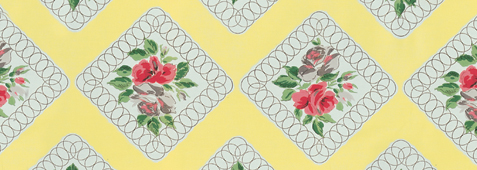
But one hundred years ago it was seen rather differently. She want to move freely, and most of all to write. But her husband, a doctor, prescribes complete rest and isolation in an attic room. A room with an iron bedstead, bars on the window and peeling yellow wallpaper.

Why? Because she cannot play the role of submissive role of wife that society – including her friends and family – has cast her in.

She has no outlet for her intellect. No means of expressing her emotions. And minimal human contact.

She becomes obsessed with the room’s hideously patterned yellow wallpaper. At first she simply dislikes it. But she grows to hate it.Then to fear it. And finally she become fascinated, absorbed by the wallpaper and the lives she within and behind it.

It is a stunning portrait of one woman’s descent into madness. And a clear indictment of a particular society’s oppression of women.

So much has been and could be written about The Yellow Wallpaper. But I feel so deeply for its narrator that I cannot write about her words intellectually.

A compelling and deeply unsettling piece of storytelling.

Monday, January 3, 2011

A Concise Chinese-English Dictionary for Lovers by Xiaolu Guo


This book sat and waited for me for a very long time. It looked good - and that it was shortlisted for the Orange Prize in 2007 was an excellent sign - and yet I didn't pick it up. I thought that I knew just what it would hold, just what it would be about before I even read it.

The combined forces of my own Clearing The Decks Project and Orange January made me pick up A Concise Chinese-English Dictionary for Lovers on New Years Day. And I'm very glad.

Yes, the story, the themes were very much as I had expected, but reading brought them into my heart and into my mind.

"Now.
"Beijing time 12 clock midnight.
London time 5 clock afternoon.
But I at neither time zone. I on airplane"


Zhuang Xiaoqiao (called “Z” because people find it difficult to pronounce her name) is a 23-year-old Chinese girl sent to the UK to study English. I wondered if I could cope with Z's fractured English, but that didn't worry me for very long at all.

The picture painted of Z is perfect: she is naive, and eager to learn, she is always watching and thinking. I was charmed, and I wanted to follow her, to walk beside her into her new life.

Her impressions and experiences as she found her feet in London were wonderfully observed, and her use of language illuminated the gulf between Chinese and English in a way that was both beautiful and clever.

I was also struck by the bravery of anyone who travels alone to a country with a very different language that they hardly know. A country so different, so far from home. I'm not sure that I could ever be that brave.

A chance meeting and a linguistic misunderstanding result in Z much older man, a failed artist, a drifter. In time she falls in love with him.

That relationship illustrates wider cultural differences. Attitudes to food, travel, sex, openness, privacy ... so many things that go to the very heart of relationships. So many differences, so many things that Z's dictionary just can't explain.

And it's one thing to identify differences, but quite another thing to understand everything that those differences mean and to learn to live with them.

"But why people need privacy? Why privacy is important? In China, every family live together, grandparents, parents, daughter, son and their relatives too. Eat together and share everything, talk about everything. Privacy make people lonely. Privacy make family fallen apart."


All of the other characters, even her lover, were faintly drawn, emphasising how different and how alone Z was. She clung to her lover and there was no room for others. How I wished she would mix with her fellow students, experience a different life, but no.

I still loved her, but at times she infuriated me.

How much was character and how much was culture? I really couldn't say.

A Concise Chinese-English Dictionary for Lovers has is flaws: the use of language is sometimes inconsistent, and the story does drag in places.

But it illuminates some wonderful truths as Z navigates through her relationship.

"People always say it's harder to heal a wounded heart than a wounded body. Bullshit. It's exactly the opposite—a wounded body takes much longer to heal. A wounded heart is nothing but ashes of memories. But the body is everything. The body is blood and veins and cells and nerves. A wounded body is when, after leaving a man you’ve lived with for three years, you curl up on your side of the bed as if there’s still somebody beside you. That is a wounded body: a body that feels connected to someone who is no longer there."


I am so pleased that I have read this book at last: I have met a heroine to cherish, and her has touched my heart and my mind far more that I thought it would.

Thursday, October 28, 2010

The Victorian Chaise-Longue by Marghanita Laski

It’s a couple of years now since I read my first couple of novels by Marghanita Laski – Little Boy Lost and then The Village. Two very different books and I loved them both.

Yet I hesitated to read The Victorian Chaise-Longue. Could it possibly live up to such high expectations? Wouldn’t it be awful to not have something new by Marghanita Laski still to read?

The second problem was solved when Persephone Books kindly reissued To Bed with Grand Music. It was time to open the pages of The Victorian Chaise-Longue.

Could it live up to my expectations?

“Will you give me your word of honour,” said Melanie, “that I am not going to die?”

It is the middle of the twentieth century. Early in Melanie’s pregnancy her doctor found a patch on her lung – an early sign of tuberculosis. She now has a son, but she hasn’t been allowed to leave her bedroom or be in close contact with her child since the birth.

But now Melanie’s health is improving, and the doctor accedes to her wish to go downstairs and lie upon the Victorian-Chaise Longue.

It’s a strange piece of furniture. Old, worn and out of keeping with the rest of the house, and yet Melanie was drawn to it. She had to have it.

Melanie is spoiled, but she has charm and I couldn't help sympathising with her situation. And wondering to what degree her upbringing, her family and society had taught her to behave as she did.

She falls asleep on her chaise-longue. And she wakes up on it. But she wakes up a hundred years earlier, in Victorian England. Where is she? Why is she being called Milly?

Melanie thinks she is in a nightmare. She tries to wake up, but she can’t. This is real. She is trapped and helpless.

Marghanita Laski conveys her feelings quite perfectly. The atmosphere is claustrophobic, and deeply unsettling. And the more you think the more unsettling it becomes.

Melanie gradually finds out more about Milly’s life. The similarities in their lives and their circumstances are extraordinary, but the consequences in their different times are starkly different.

“We seem to be together now, she explained, you and I, both hopeless. I think we did the same things, she told her, we loved a man and we flirted and we took little drinks, but when I did those things there was nothing wrong, and for you it was a terrible punishable sin.”

It would be unfair to say too much more, but the situation and Melanie’s emotions intensify as the story build to a conclusion.

The Victorian Chaise-Longue works on more than one level. It is a fine piece of storytelling and it is also a striking analysis of the changing position of women in society.

And while many authors would make a lengthy novel out of this material, Marghanita Laski distils it perfectly into just 99 pages.

The writing and the characterisation is as wonderful as my previous experiences with her writing had led me to expect.

And, once again, Marghanita Laski has come up with a stunning final sentence. How does she do that?!

The Victorian Chaise-Longue definitely lived up to my high expectations.

Tuesday, April 13, 2010

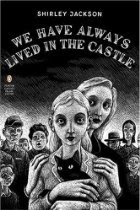
We Have Always Lived in the Castle by Shirley Jackson


"My name is Mary Katherine Blackwood. I am eighteen years old, and I live with my sister Constance. I have often thought that with any luck at all I could have been born a werewolf, because the two middle fingers on both my hands are the same length, but I have had to be content with what I had. I dislike washing myself, and dogs, and noise. I like my sister Constance, and Richard Plantagenet, and Amanita phalloides, the death-cup mushroom. Everyone else in my family is dead."

So much praise for this little book. Could it possibly live up to expectations? Of course it could. And I knew it would from that wonderful opening paragraph.

Merricat (well how would you abbreviate Mary Katherine ?!) is a quite wonderful narrator - engaging, unreliable and utterly unique. And her tale is quite extraordinary.

But I'm not going to say too much about that tale. Much has been written already. And if you haven't read the book you really should. And you will enjoy it more for knowing little beforehand.

Merricat lives in the family home with Constance, her elder sister and Julian, her elderly uncle. The rest of the family has died.

How?

Merricat is the only member of the family who ever goes to town - to do necessary shopping. She is regularly jostled and jeered.

Why?

The arrival of a visitor prompts a series of events and revelations.

What?

The answering of those questions is intriguing and compelling and will take you into a very strange and different world. A world were every detail, every charater, ever relationship is just perfectly executed.

The main revelation is guessable, but that really doesn't matter. It just throws up more questions.

I started intigued and finished unsettled.

Praise more than justified, and expectations more than met.

Friday, June 5, 2009

Jane's List

Here's my list:

  1. Half of a Yellow Sun by Chimamanda Ngozi Adichie
  2. A Long and Fatal Love Chase by Louisa May Alcott
  3. Girl in a Blue Dress by Gaynor Arnold
  4. Love Letters Between a Nobleman and His Sister by Aphra Behn
  5. The Needle in the Blood by Sarah Bower
  6. The Good Earth by Pearl S Buck
  7. The Master and Margarita by Mikhail Bulgakov
  8. The Shuttle by Frances Hodgson Burnett
  9. A Month in the Country by J L Carr
  10. Sylvie and Bruno by Lewis Carroll
  11. The Awakening by Kate Chopin
  12. The Shutter of Snow by Emily Holmes Coleman
  13. Family Roundabout by Richmal Crompton
  14. Zofloya by Charlotte Dacre
  15. The Diary of a Provincial Lady by R M Delafield
  16. Bleak House by Charles Dickens
  17. Marianna by Monica Dickens
  18. Crime and Punishment by Fydor Dostoyevky
  19. The Count of Monte Christo by Alexandre Dumas
  20. The Cathedral of the Sea by Ildefonso Falcones
  21. The Brontes Went To Woolworths by Rachel Ferguson
  22. Lady Rose and Mrs Memmary by Ruby Ferguson
  23. Crossriggs by Jane & Mary Findlater
  24. The Home-maker by Dorothy Canfield Fisher
  25. The Bookshop by Penelope Fitzgerald
  26. The Magic Goblet by Emilie Flygarde-Carlen
  27. The Coquette by Hannah W Foster
  28. Nightingale Wood by Stella Gibbons
  29. The Yellow Wallpaper by Charlotte Perkins Gilman
  30. The Horseman on the roof by Jean Giono
  31. The Odd Woman by George Gissing
  32. Black Narcissus by Rumer Godden
  33. Water for Elephants by Sara Gruen
  34. Just Like Tomorrow by Faiza Guene
  35. A Concise Chinese-English Dictionary for Lovers by Xiaolu Guo
  36. The Well of Loneliness by Radclyffe Hall
  37. The Electric Michelangelo by Sarah Hall
  38. Twenty Thousand Streets Under the Sea by Patrick Hamilton
  39. The Gone-Away World by Nick Harkaway
  40. The Ghostwriter by John Harwood
  41. Ursula Under by Ingrid Hill
  42. Heart-Shaped Box by Joe Hill
  43. A Hollow Crown by Helen Hollick
  44. A Thousand Splendid Suns by Khaled Hosseini
  45. Their Eyes Were Watching God by Zora Neale Hurston
  46. A Simple Story by Elizabeth Inchbold
  47. We Have Always Lived in the Castle by Shirley Jackson
  48. The Tortoise and the Hare by Elizabeth Jenkins
  49. My Dirty Little Book of Stolen Time by Liz Jensen
  50. The Trial by Franz Kafka
  51. Day by A L Kennedy
  52. The Princess of Cleves by Madame de Lafayette
  53. Longing by J D Landis
  54. The Victorian Chaise Longue by Marghanita Laski
  55. Dusty Answer by Rosamond Lehmann
  56. The Female Quixote by Charlotte Lennox
  57. The Voluptuous Delights of Peanut Butter and Jam by Lauren Liebenberg
  58. The Towers of Trebizond by Rose Macaulay
  59. The Silent Duchess by Dacia Maraini
  60. Deerbrook by Harriet Martineau
  61. The Painted Veil by Somerset Maugham
  62. Peyton Place by Grace Metalious
  63. Black Swan Green by David Mitchell
  64. The Last Witchfinder by James Morrow
  65. Suite Francaise by Irene Nemirovsky
  66. As Music and Splendour by Kate O'Brien
  67. The World is not Enough by Zoe Oldenbourg
  68. Lullabies for Little Criminals by Heather O'Neill
  69. The Quincunx by Charles Palliser
  70. One Fine Day by Mollie Panter-Downes
  71. Special Topics in Calamity Physics by Marisha Pessl
  72. Manon Lescaut by Abbe Prevost
  73. Excellent Women by Barbara Pym
  74. Cullum by E Arnot Robertson
  75. The Little Prince by Antoine de Saint-Exupéry
  76. Dissolution by C J Sansom
  77. Blindness by Jose Saramango
  78. Alfred and Guinevere by James Schuyler
  79. Katherine by Anya Seton
  80. The Hopkins Manuscript by R C Sherriff
  81. The Post-Birthday World by Lionel Shriver
  82. The Far Cry by Emma Smith
  83. Summer in February by Jonathan Smith
  84. Loitering With Intent by Muriel Spark
  85. Saplings by Noel Streatfield
  86. Palladian by Elizabeth Taylor
  87. The Man in the Queue by Josephine Tey
  88. Vanity Fair by William Makepeace Thackery
  89. Popco by Scarlett Thomas
  90. Anna Karenina by Leo Tolstoy
  91. He Knew He Was Right by Anthony Trollope
  92. Lolly Willowes by Sylvia Townsend Warner
  93. Cress Delahanty by Jessamyn West
  94. Someone at a Distance by Dorothy Whipple
  95. Sudden Rain by Maritta Wolff
  96. One Way of Loving by Gamel Woolsey
  97. The Daisy Chain by Charlotte M Yonge
  98. Miss Mole by E H Young
  99. The Ladies' Paradise by Emile Zola
  100. The Book Thief by Markus Zusak

Wish me luck!