I got a few titles on my list read recently, but haven't been good about posting reviews, or links to the responses I did post. Here are a few now (with a few more reviews coming soon, I hope):
Bush at War — much better than I expected it to be
Marco Polo Sings a Solo, and Streamers — both were very good, but I really loved Marco Polo Sings a Solo
Catch Me if You Can — entertaining, but not believable at all
Sorry to be so brief in my post here, but my connection to Blogspot is not very good at the moment. If I can get a better connection soon, I'll try to post an actual review here (and not just links) on some of the other titles I've recently finished.
~Shelly
Saturday, April 17, 2010

Interim Read
While I'm slowly plugging along at Don Quixote, I not only read a few non-list items - the most recommendable of which is The Ask by Sam Lipsyte (great fun) - , but also one of my listed ones.
Das Hasek Lesebuch, a collection of shorter pieces by Jaroslav Hasek (1883-1923).
His great claim to fame is The Good Soldier Svejk, one of my favorite books ever. His shorter stories work along similar lines: the dirty reality of getting along in the world of central Europe in the early 20th Century shows up all the cracks in the official face of things.
The Svejk stories (which survive being taken out of context of the big work and are represented here, too) have the benefit of the delightful character of Svejk himself, who appears a bumbling fool, but is really a survivor of the most divinely inspired sort.
It makes me happy just thinking about it again.
(And, now back to Don Quixote and Sancho.)
Tuesday, April 13, 2010
We Have Always Lived in the Castle by Shirley Jackson
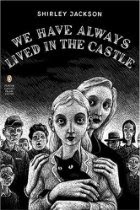
"My name is Mary Katherine Blackwood. I am eighteen years old, and I live with my sister Constance. I have often thought that with any luck at all I could have been born a werewolf, because the two middle fingers on both my hands are the same length, but I have had to be content with what I had. I dislike washing myself, and dogs, and noise. I like my sister Constance, and Richard Plantagenet, and Amanita phalloides, the death-cup mushroom. Everyone else in my family is dead."
So much praise for this little book. Could it possibly live up to expectations? Of course it could. And I knew it would from that wonderful opening paragraph.
Merricat (well how would you abbreviate Mary Katherine ?!) is a quite wonderful narrator - engaging, unreliable and utterly unique. And her tale is quite extraordinary.
But I'm not going to say too much about that tale. Much has been written already. And if you haven't read the book you really should. And you will enjoy it more for knowing little beforehand.
Merricat lives in the family home with Constance, her elder sister and Julian, her elderly uncle. The rest of the family has died.
How?
Merricat is the only member of the family who ever goes to town - to do necessary shopping. She is regularly jostled and jeered.
Why?
The arrival of a visitor prompts a series of events and revelations.
What?
The answering of those questions is intriguing and compelling and will take you into a very strange and different world. A world were every detail, every charater, ever relationship is just perfectly executed.
The main revelation is guessable, but that really doesn't matter. It just throws up more questions.
I started intigued and finished unsettled.
Praise more than justified, and expectations more than met.
Monday, April 12, 2010
Matthew, Book Review, *Jose Saramago, *Blindness
Blindness (1995), by Portuguese author Jose Saramago, is a hell of a thing. And I mean that in a Cronenberg, Blood Meridian, oh man is this ever depressing and violent and crushing but I can't stop reading it sort of way.
As the novel begins, an unidentified man suddenly goes blind while driving home from work one day. A few hours thereafter, everyone he came in contact with after the onset of his blindness goes blind, followed by the people they came in contact with, and so on. The affliction spreads quickly, and the government reacts to the crisis by quarantining the blind in an empty mental hospital. The bulk of the novel takes place inside the hospital, where everything goes to hell in pretty much every way you could imagine it would.
Saramago likes to write in long, winding series of clauses spliced together with commas, with dialogue thrown in mid-stream with only a comma and a capital letter to call attention to itself:
Blindness isn't all doom and gloom, however; even in its darkest moments there seems to be an underlying sense of hope that I don't recall seeing in similarly bleak novels (I'm looking at you, The Trial and Blood Meridian).
As the novel begins, an unidentified man suddenly goes blind while driving home from work one day. A few hours thereafter, everyone he came in contact with after the onset of his blindness goes blind, followed by the people they came in contact with, and so on. The affliction spreads quickly, and the government reacts to the crisis by quarantining the blind in an empty mental hospital. The bulk of the novel takes place inside the hospital, where everything goes to hell in pretty much every way you could imagine it would.
Saramago likes to write in long, winding series of clauses spliced together with commas, with dialogue thrown in mid-stream with only a comma and a capital letter to call attention to itself:
In a few minutes, the rescuers reached their destination, they knew it before even coming into contact with the bodies, the blood over which they were crawling was like a messenger coming to tell them, I was life, behind me there is nothing, My God, thought the doctor's wife, all this blood, and it was true, a thick pool, their hands and clothing stuck to the ground as if the floorboards and floor tiles were covered in glue.Which reminds me, no one is ever given a name in this book. Instead of names, each character is referred to by their job, relationship, or a short physical description, thereby furthering the theme of dehumanization and degradation.
Blindness isn't all doom and gloom, however; even in its darkest moments there seems to be an underlying sense of hope that I don't recall seeing in similarly bleak novels (I'm looking at you, The Trial and Blood Meridian).
Thursday, April 8, 2010
One Year Later
I had my FitG first anniversary on April 4. That's when it hit me how long it's been since I last posted on my progress.
Actually, I'm embarrassed about my progress. I'll blame it on an international move and gutting and renovating a house, but I didn't get as much reading done as I would have liked. Besides, it took me forever to get through The Three Musketeers. For. Ev. Er.
Still, I thought, as a belated celebration of my anniversary, I'd re-post my list to show my progress and provide links to my blog with the reviews I did manage to write. (Please note: I didn't write a review for every book I read -- just the ones that moved me to write about them.)
As far as statistics go, I'm at eighteen books finished (assuming I counted correctly!) at the one year mark. Even at this (slow) rate, I should be able to meet my goal of 75% read by 2014. Phew!
I've officially abandoned one book so far (see below). That one might surprise some, because I know that one received rave reviews. I couldn't get into it, unfortunately. Call me crazy.
Neil Gaiman, The Graveyard BookLaura Amy Schlitz, Good Masters! Sweet Ladies! Voices from a Medieval VillageLynn Rae Perkins, Criss CrossCynthia Kadohata, Kira-KiraKate Dicamillo, The Tale of Despereaux: Being the Story of a Mouse, A Princess, Some Soup, and a Spool of Thread- Avi Crispin, The Cross of Lead
- Linda Sue Park, A Single Shard
- Richard Peck, A Year Down Yonder
Christopher Paul Curtis, Bud, Not BuddyLaurie Halse Anderson, SpeakJay Asher, Thirteen Reasons Whyabandoned (the linked review includes a short, post script explanation)Elizabeth C. Bunce, A Curse as Dark as GoldAlexandre Dumas, The Three Musketeers- Alexandre Dumas, The Man in the Iron Mask
- Leslie Conner, Waiting For Normal
- Siobhan Dowd, Bog Child
- Christine Fletcher, Ten Cents a Dance
Matt de la Pena, Mexican White Boy- Joseph Monninger, Baby
- Terry Pratchett, Nation
- Mariko Tamaki and Jillian Tamakim, Skim
- Coert Voorhees, The Brothers Torres
- Suzanne Collins, The Hunger Games
- Melina Marchetta, Jellicoe Road
- Margo Lanagan, Tender Morsels
Stephanie Meyer, Twilight- Jeff Kinney, Diary of a Wimpy Kid
- Richelle Mead, Vampire Academy
- Libba Bray, The Sweet Far Thing
- Scott Westerfeld, Extras
- Jenny Downham, Before I Die
- Laurie Halse Anderson, Twisted
- Cassandra Clare, City of Bones
- Eudora Welty, The Robber Bridegroom
Eudora Welty, The Ponder Heart- Eudora Welty, Losing Battles
- Annie Dillard, The Maytrees
- Annie Dillard, Living By Fiction
- Annie Dillard, For the Time Being
- Katherine Mansfield, The Aloe
- Charles Dickens, Oliver
C.J. Sansom, Dark FireC.J. Sansom, Sovereign- Michael Chabon, The Amazing Adventures of Kavalier and Clay
- Michael Chabon, The Yiddish Policeman’s Union
- Ayelet Waldman, Daughter’s Keeper
- J.D. Salinger, Catcher in the Rye
- S.E. Hinton, The Outsiders
- Robert Lipsyte, The Contender
- Chaim Potok, The Chosen
- Paul Zindel, The Pigman
- Beatrice Sparks, Go Ask Alice
- Robb White, Deathwatch
- Robert Cormier, The Chocolate War
Pamela Todd, The Blind Faith Hotel- Lois Duncan, Killing Mr. Griffin
- Robert Cormier, I Am the Cheese
- Harry Mazer, The Last Mission
- Cynthia Voigt, Homecoming
- Bruce Brooks, The Moves Make the Man
- Richard Peck, Remembering the Good Times
- Brock Cole, The Goats
- Gary Paulsen, Hatchet
- Walter Dean Myers, Fallen Angels
- Francesca Lia Block, Weetzie Bat
- Jerry Spinelli, Maniac Magee
- Michael Cadnum, Calling Home
- Virginia Wolff, Make Lemonade
- Karen Cushman, Catherine Called Birdy
- Cynthia Voigt, When She Hollers
- Rita Williams-Garcia, Like Sisters on the Home Front
- John Marsden, Tomorrow When the War Began
- Christopher Paul Curtis, The Watsons Go to Birmingham, 1963
- Victor Martinez, Parrot in the Oven, Mi Vida
- Edward Bloor, Tangerine
- Robert Cormier, Tenderness
- Virginia Wolff, Bat 6
- Joan Bauer, Rules of the Road
- Gary Paulsen, Soldier’s Heart
- Paul Fleischman, Whirligig
- Sarah Dessen, Dreamland
- Richard Peck, A Long Way from Chicago
- Chris Lynch, Gold Dust
Gary Paulsen, The Beet Fields: Memories of a Sixteenth Summer- Judith Guest, Ordinary People
- Joseph Bedier, The Romance of Tristan and Iseult
- David Klass, You Don’t Know Me
- Carol Plum-Ucci, What Happened to Lani Garver
- Jerry Spinelli, Star Girl
- Sonya Sones, One of Those Hideous Books Where the Mother Dies
- Ann Brashares, Sisterhood of the Traveling Pants
- Karen Hesse, Out of the Dust
- Lois Lowry, The Giver
- Ray Bradbury, Fahrenheit 451
- Michael Chabon, Summerland
Sarah Dessen, Just ListenMarsha Qualey, Just Like That- Newbery Winner
- Newbery Winner
- Newbery Winner
I have a long way to go, but every time I look at this list, I get excited all over again. So many great books in my future. I've requested four more from our library system this week and currently have Homecoming on the bedside table.
Have a great week, everyone! Happy reading.
Wednesday, April 7, 2010
Thought I'd Mention . . .
Nathan Bransford is asking, as part of his You Tell Me series :
What are your Gap Books?
Thought people might be interested in the post and some of the comments.
Definitely Classics seem to make up the bulk of the Gap Books.
What are your Gap Books?
Thought people might be interested in the post and some of the comments.
Definitely Classics seem to make up the bulk of the Gap Books.
Monday, April 5, 2010
Linda P-Justine by The Marquis De Sade
Since my library did not have Justine, I choose to read 3 of de Sade's works instead-The Gothic Tales of The Marquis De Sade, Philosophy of the Boudoir, and The Selected Writings of The Marquis de Sade. Justine was included in The Selected Writings of The Marquis de Sade but that book was annotated.
I think I must have the found the most boring stories written by the Marquis de Sade. The only stories I liked were "The Dying Man and The Priest" and "The Horse-Chestnut Flower". Sure there was sex but it wasn't as lurid as I had thought it would be. Glad to have another book off my list.
I think I must have the found the most boring stories written by the Marquis de Sade. The only stories I liked were "The Dying Man and The Priest" and "The Horse-Chestnut Flower". Sure there was sex but it wasn't as lurid as I had thought it would be. Glad to have another book off my list.

